Department of Electrical and Electronic Engineering
Electrical Circuit Fundamentals Laboratory
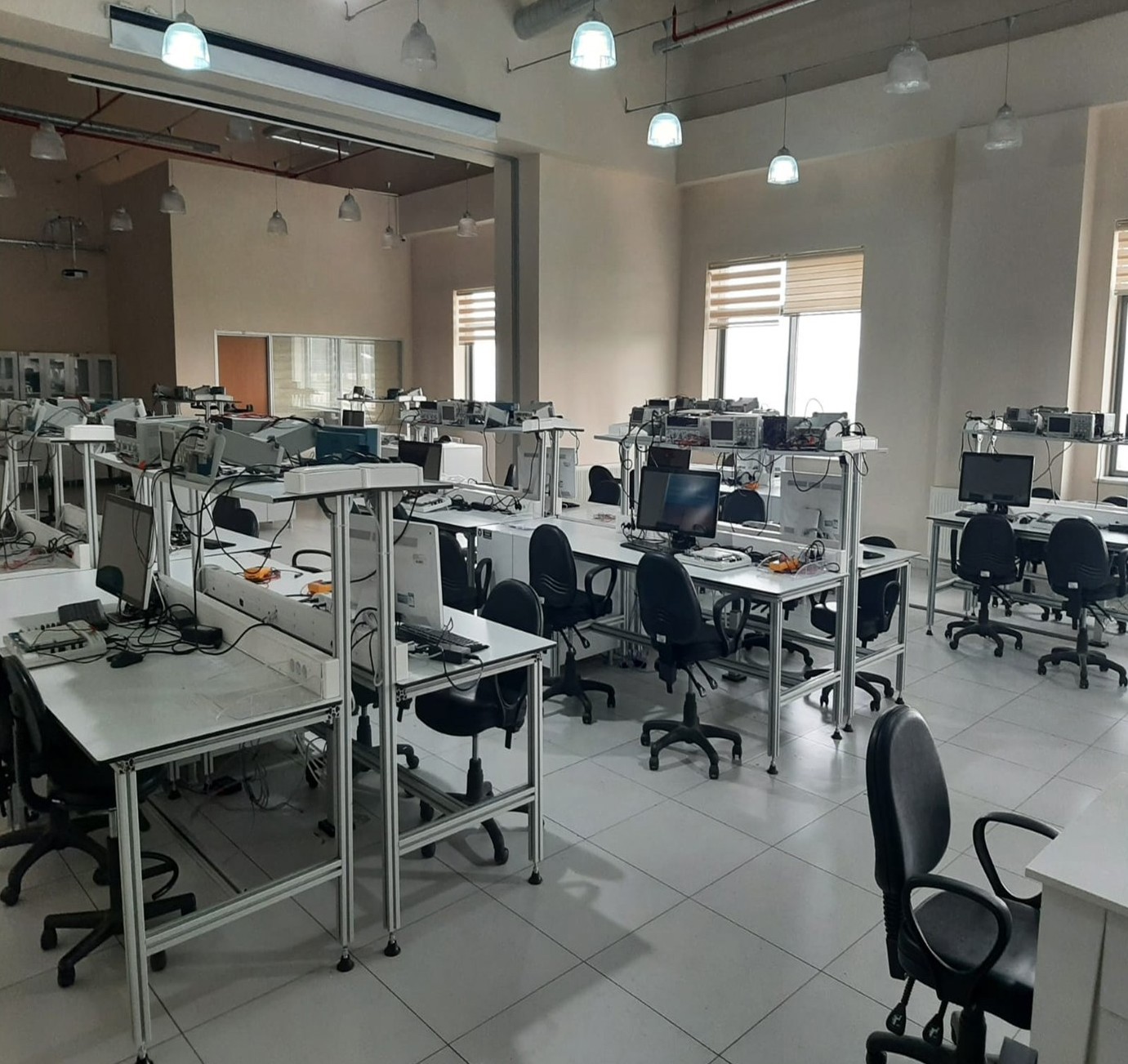
The Electrical Circuit Fundamentals Laboratory is equipped with modern measurement and experimentation infrastructure that allows students to learn the fundamental principles of electrical circuits through hands-on experience. Experiments are conducted in the laboratory on direct current (DC) and alternating current (AC) circuits, Kirchhoff's laws, circuit theorems, transient analyses, filter circuits, resonance phenomena, and basic measurement techniques. Students gain valuable experience for engineering applications by developing skills in circuit construction, measurement, error analysis, and interpreting experimental results.
Experiments that can be performed
- Applications of Ohm's Law
- Kirchhoff's Current and Voltage Laws
- Series and Parallel Circuit Analyses
- Thevenin and Norton Theorems
- Maximum Power Transfer Theorem
- RC, RL, and RLC Circuit Analyses
- Transient Regime Analyses
- Phase and Frequency Measurements in AC Circuits
- Resonance Experiments
- Frequency Response Analysis of Filter Circuits
- Oscilloscope and Multimeter Usage Applications
Electrical Circuit Fundamentals Laboratory Equipment List
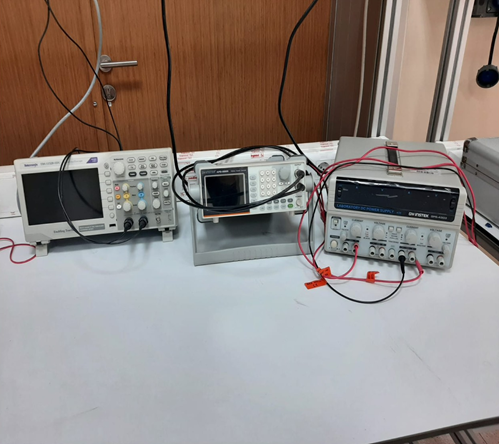
1. Tektronix TBS 1152B-EDU Digital Oscilloscope
- 150 MHz bandwidth
- 2 analog input channels
- 2 GS/s real-time sampling rate
- FFT (Fast Fourier Transform) analysis
- Automatic amplitude, frequency, and phase measurements.
- Educational internal aid and laboratory modules
2. GW Instek GPS-4303 DC Power Supply
- 4 independent output channels
- 0–30 V / 0–3 A adjustable outputs
- Support for serial and parallel operation.
- Low output noise and high stability.
- Overcurrent and short circuit protection features
3. GW Instek AFG-2225 Function Generator
- 25 MHz output frequency
- Dual channel signal generation
- Sine, square, triangle, and pulse waveforms.
- AM, FM, FSK, and Sweep modes
- Suitable design for circuit frequency response and filter experiments.
4. Fluke 175 True-RMS Digital Multimeter
- True-RMS AC/DC measurement capability
- Measurement of voltage, current, resistance, and frequency.
- Diode and continuity test
- High measurement accuracy.
- Durable construction for industrial use.
- CAT III 1000 V / CAT IV 600 V safety class
5. LCR-9184 Precision LCR Meter
- Measurement of inductance (L), capacitance (C), and resistance (R).
- Impedance (Z), Phase Angle (θ), Quality Factor (Q), and Loss Factor (D) measurements.
- Multiple test frequency support
- Series and parallel equivalent circuit analyses
Thanks to this laboratory infrastructure, students can experimentally investigate the basic working principles of electrical circuits and gain practical experience in the use of modern measuring instruments.
 Merhaba, ben Kartanesi sana yardımcı olabilmek için burdayım, Yapmak istediğin işlemi seçebilir misin?